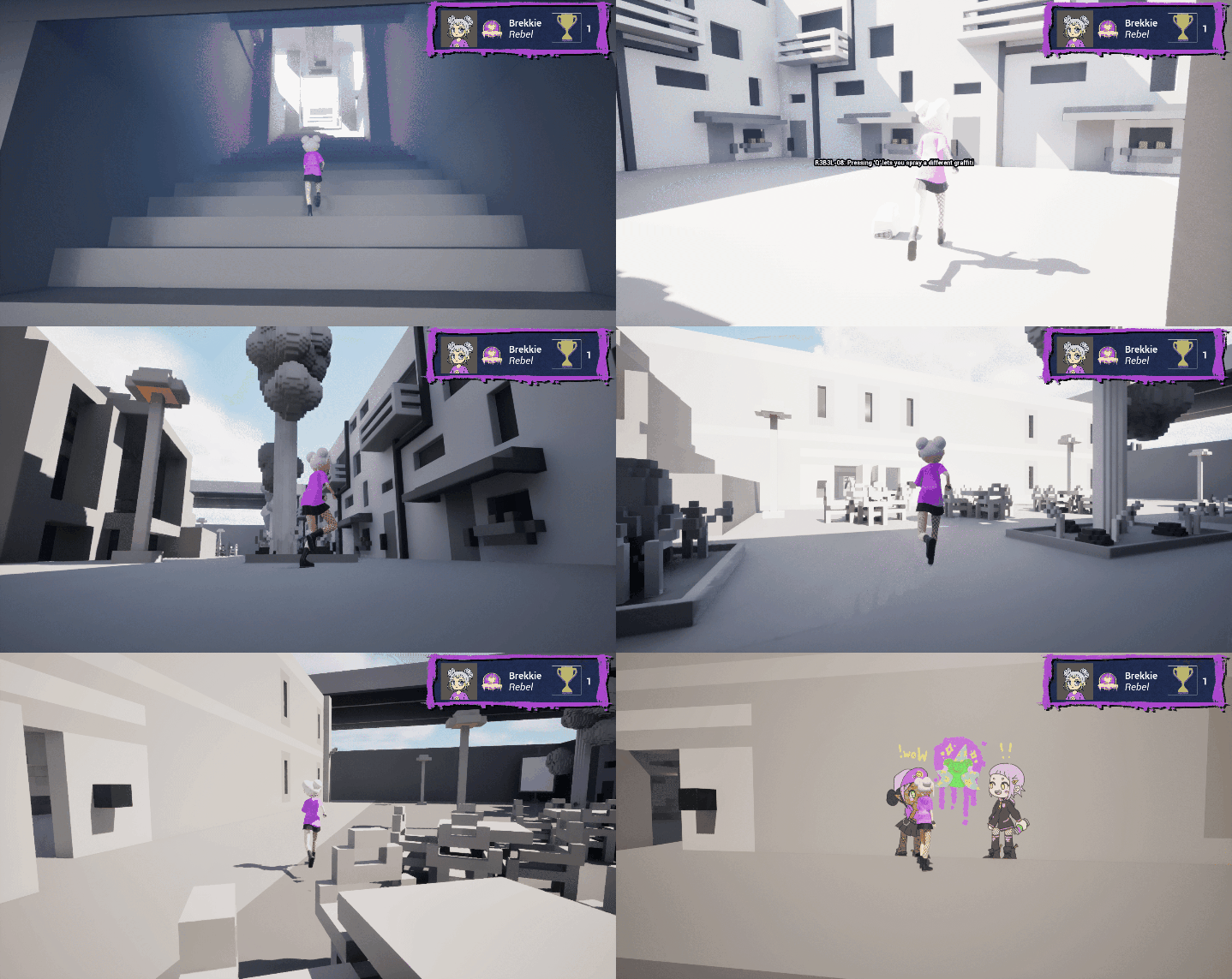
TroubleMakers (2024)
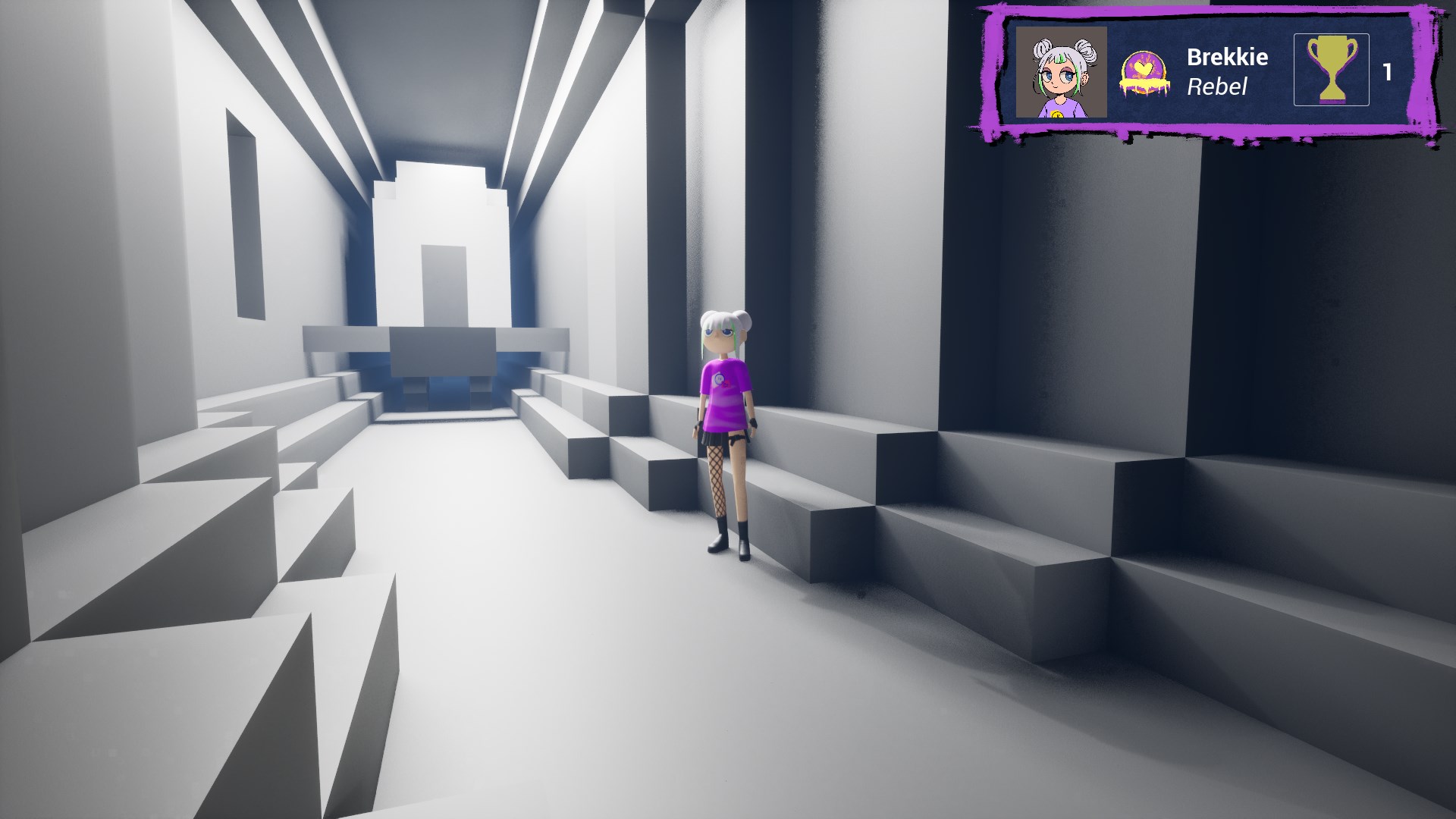
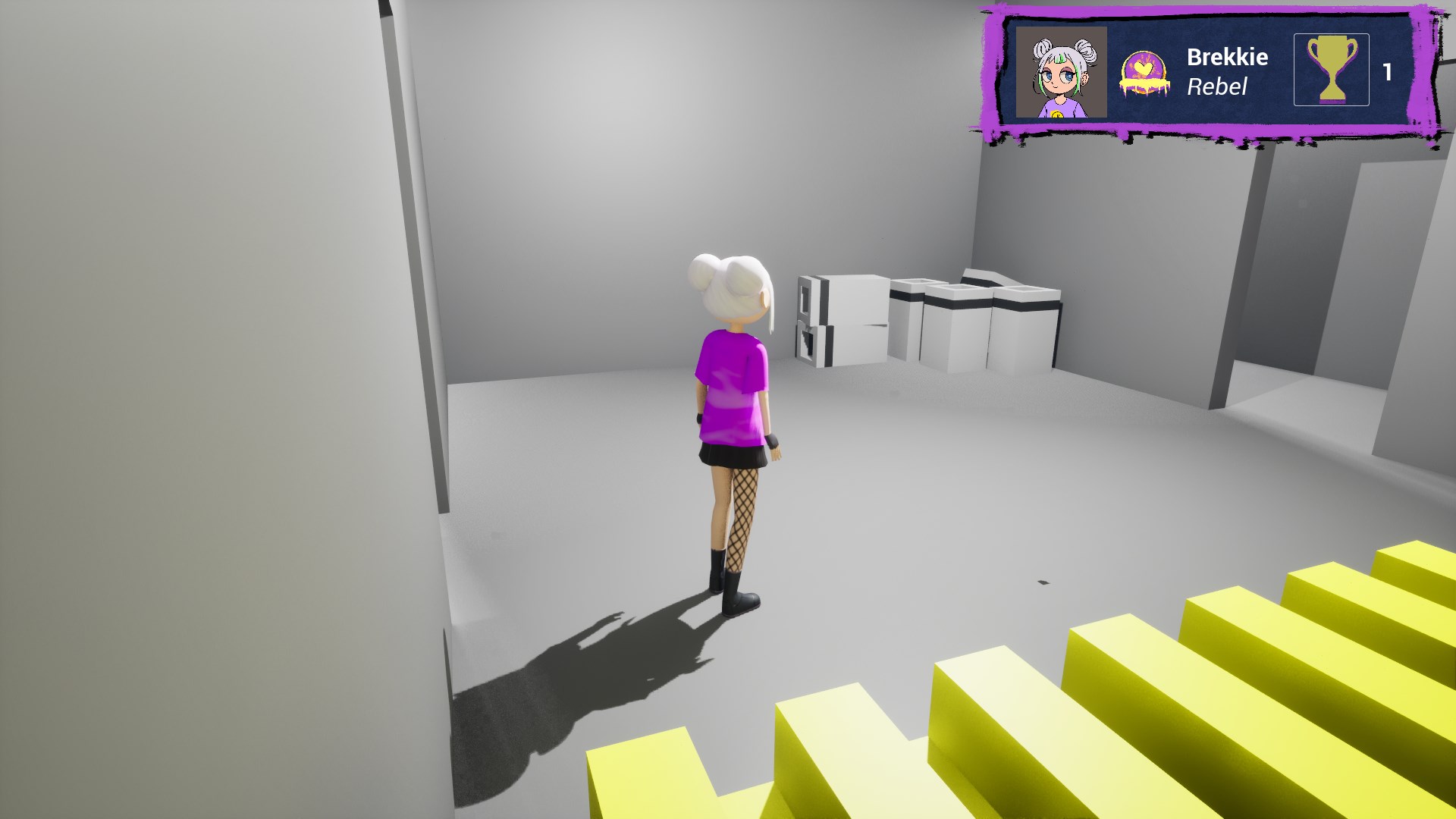
TroubleMakers is an open world, social sandbox game that encourages players to unleash their creativity inside a virtual world, sharing and celebrating their work with the community.
My Role: Level Designer
Engine: Unreal Engine 5
Tools: PureRef, MagicaVoxel
Team Size: 5
Download: Unreleased
TroubleMakers provides players with a social space to share and celebrate creativity, but instead of posting to social media, the player’s canvas is the urban environment around them, literally spraying their works onto any surface.
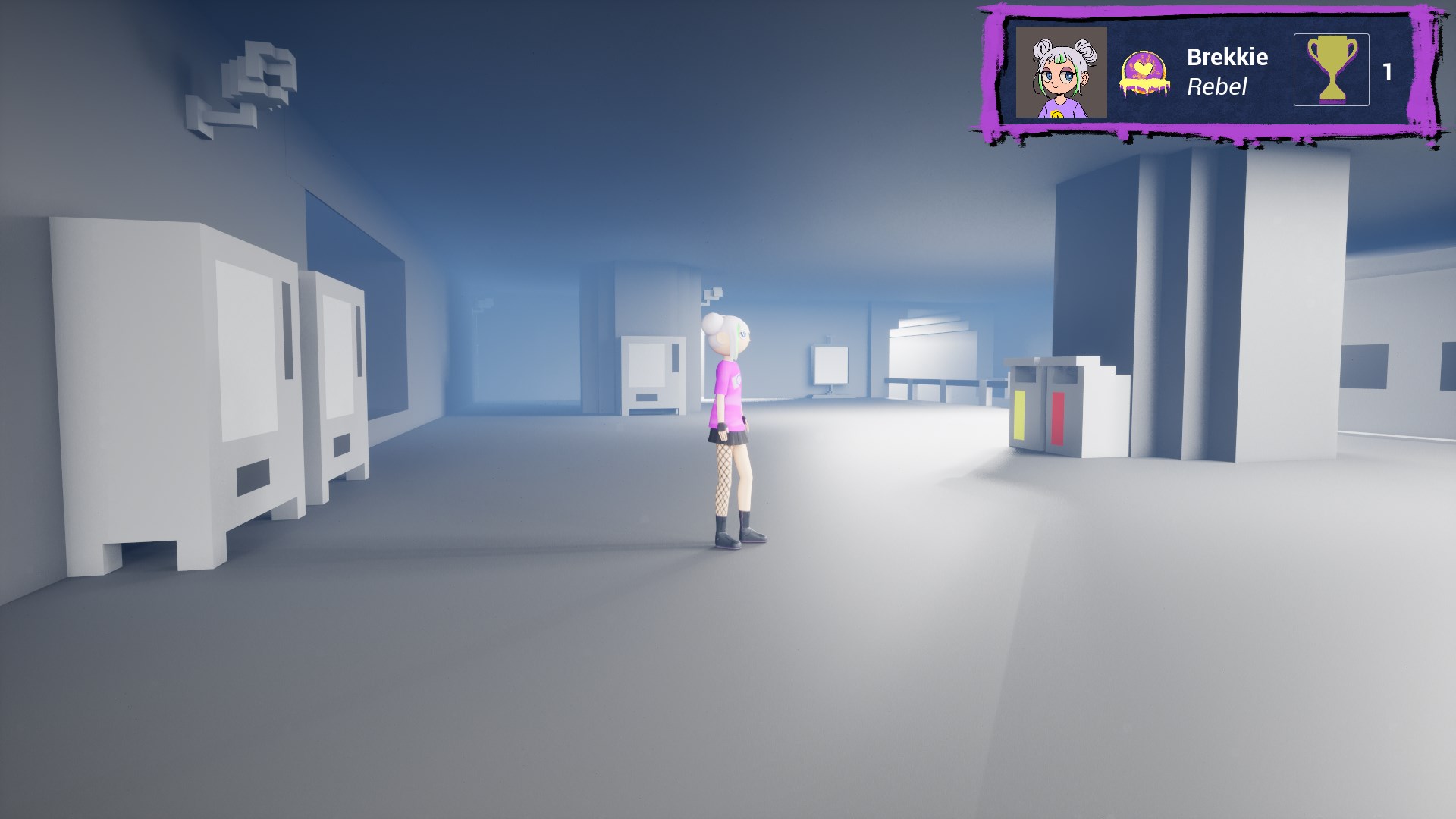
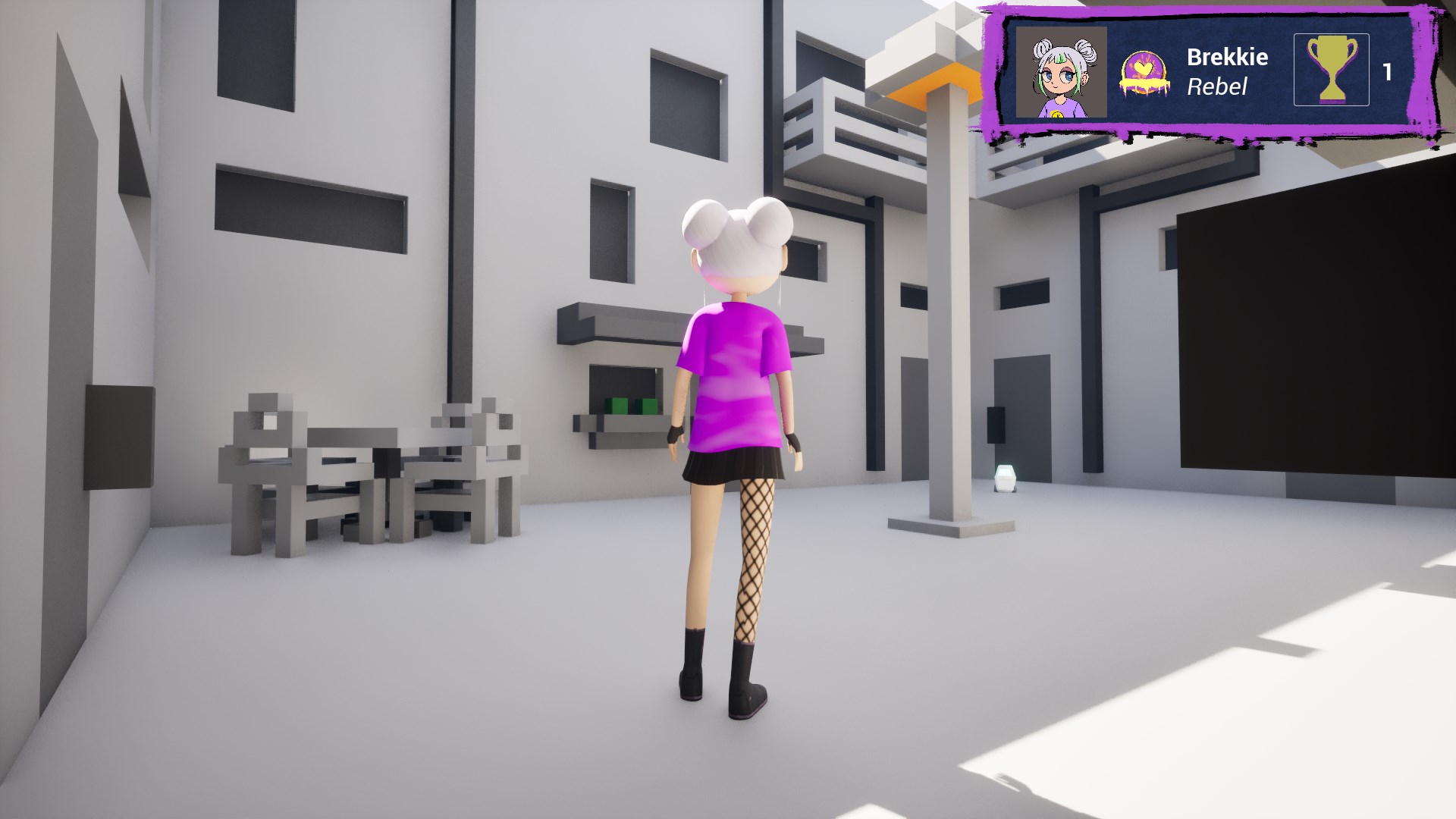
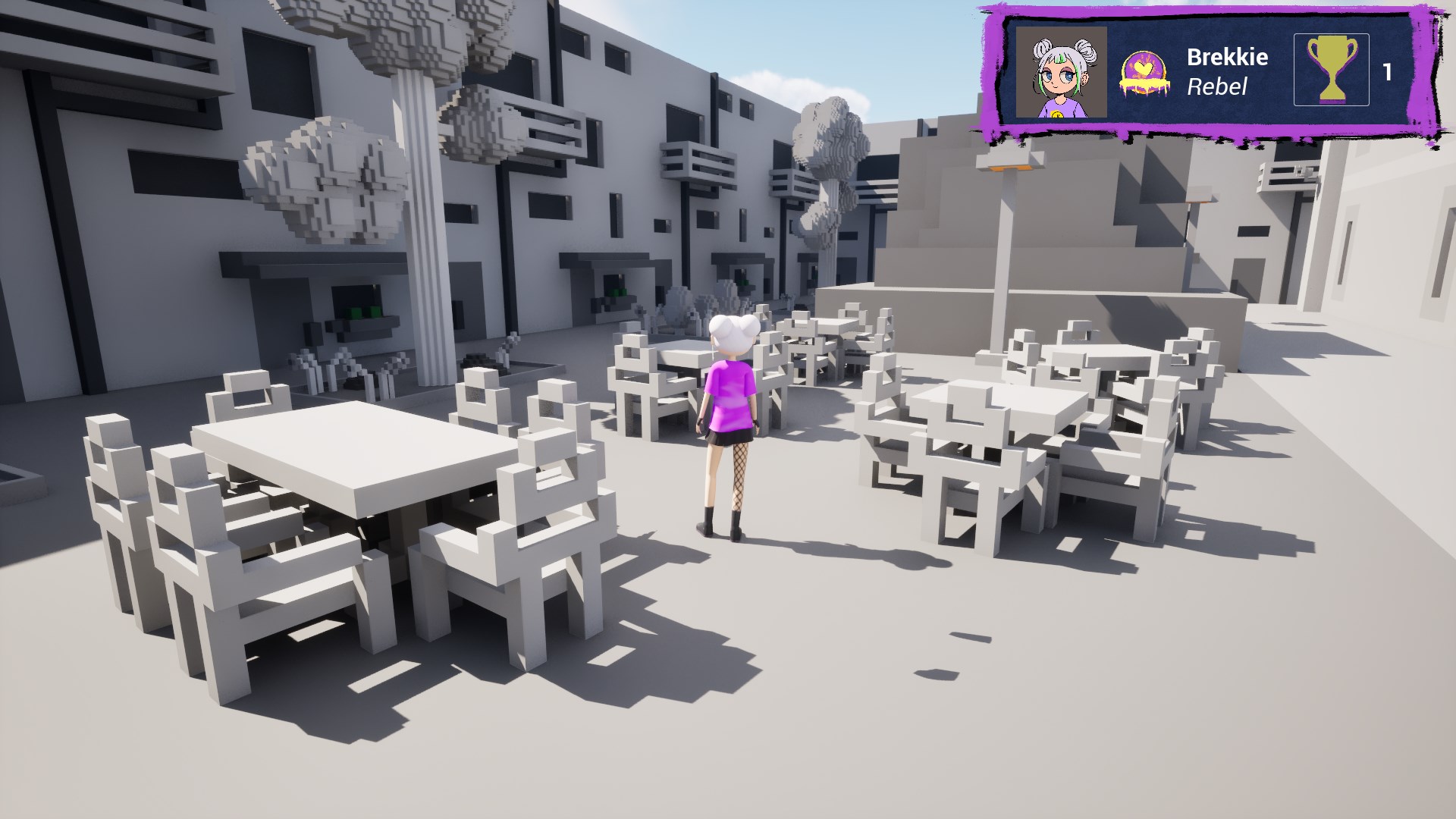
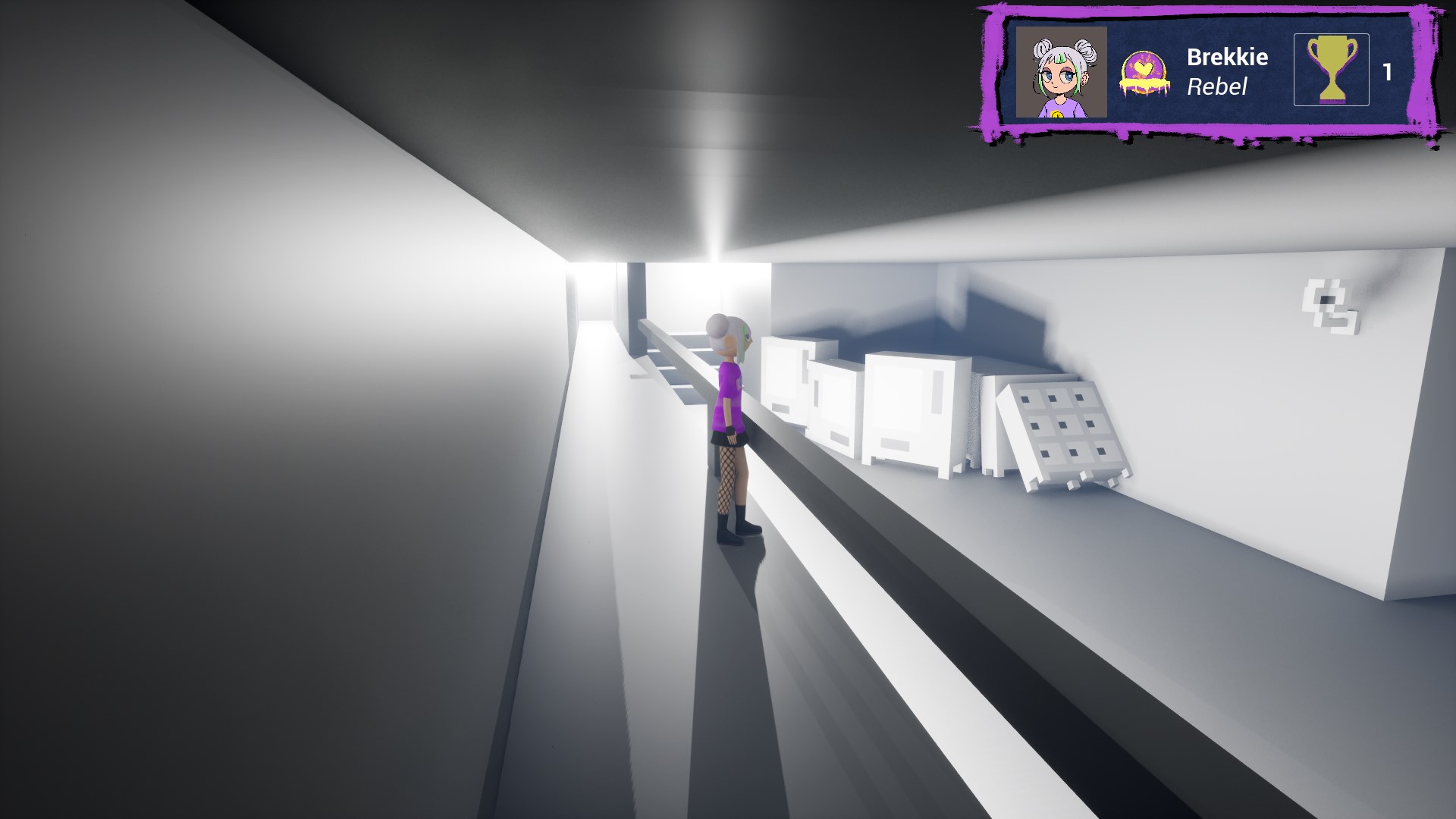
The winding alleys and underground metro station provide players the opportunity to explore and find the perfect spot for their art while the open skatepark and museum with its freedraw canvases foster shared creativity with other players.
As players explore and spray, they can find and react to others’ sprays, each action counting towards achievements, rewarding the player with points used to buy cosmetic customisations.
Developoment
Summary
TroubleMakers is a game concept and prototype developed for a University class with the requirements that it promote and encourage creativity, specifically thinking outside the box or bending the rules. Our group leant heavily into the troublemakers/rapscallion theme, hence the name, and focused on three core pillars; community, celebration and creativity. I contributed to the development of these pillars, as well as the theming, design and documentation, and had a focus on the level design. Our goal for TroubleMakers was to create a ‘living gallery of trouble’, or a space that would become imbued with the personalities of the players occupying it as they shared their art and made the space their own, evolving over time.
Level Design
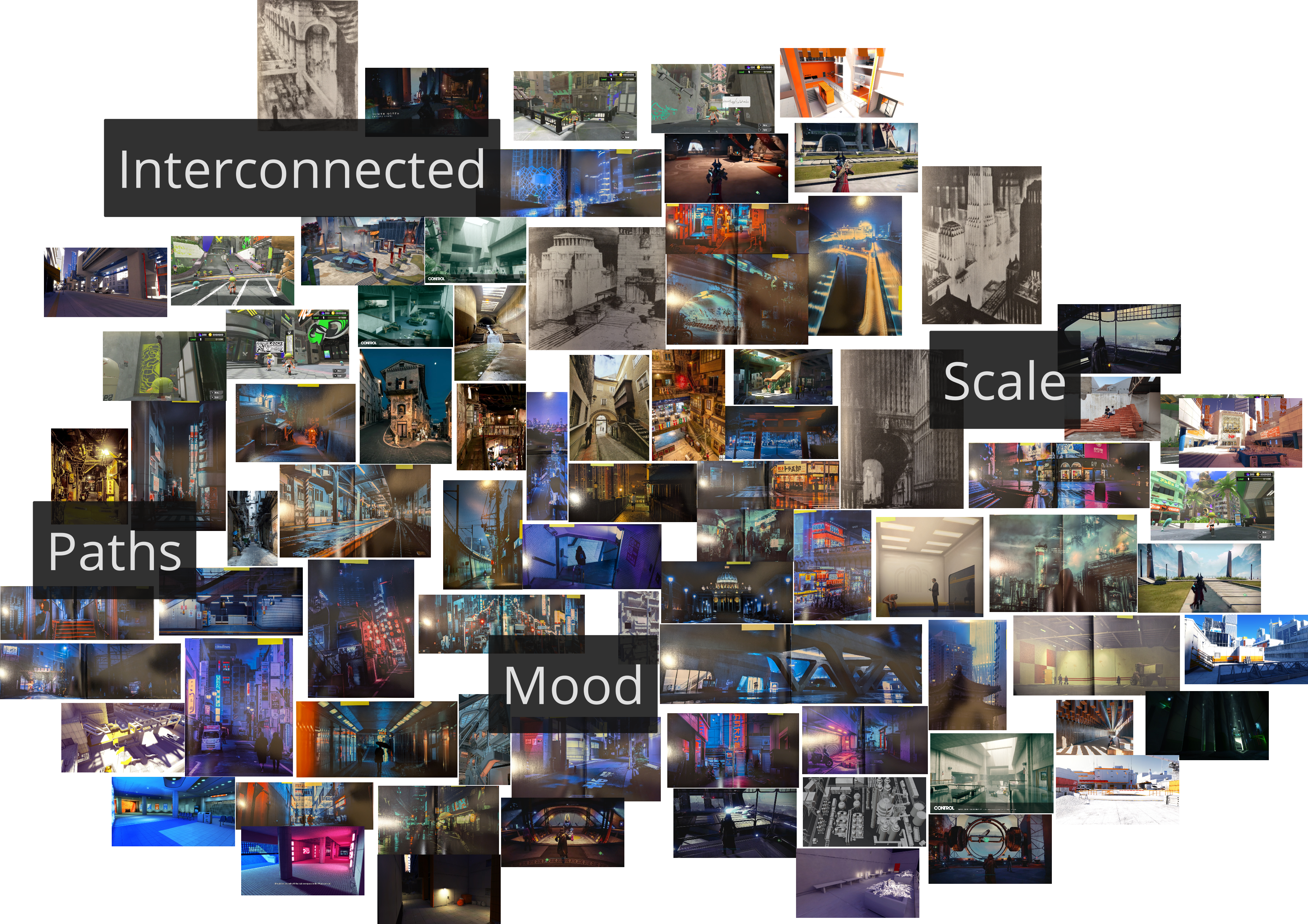
My primary focus in this project was level design, specifically, my goal was to create levels that would uphold the pillars while enticing players to be mischievous and create space for emerging narratives to grow from player behaviour. Using the style and theme established by the group, I gathered a collection of inspiration images into a PureRef file, including from games like Splatoon and photographers such as Liam Wong, focusing on architecture and urban environments. Using keywords related to our level design goals, I organised the inspiration images into a cloud where position to each keyword corresponded to the image’s relevance to it. This organisation significantly helped during level prototyping as I compared my progress to the keywords and drew inspiration from the specific areas that I needed to work on.
I chose to create two levels/areas for the game, an underground metro, and a skatepark with surrounding alleys. I chose these locations as they afforded the inclusion of spaces that people are usually not allowed to go, such as into maintenance areas, offering players a chance to break the rules. They also represent urban gathering points where communities have the potential to form, encouraging the sharing and celebration of art. While building these levels, I thought about what I could include that would be interesting to spray or explore, drawing from the gathered inspiration and my personal experience in urban photography. These levels were created using the voxel design tool MagicaVoxel, for its ease of use and strengths in rapid prototyping. To reinforce the main mechanic of spraying art onto every surface, we decided to limit the colour palette to neutral grey tones, so that sprays would pop. I also tried to include large, flat surfaces where I could to create high-quality canvases for the art.
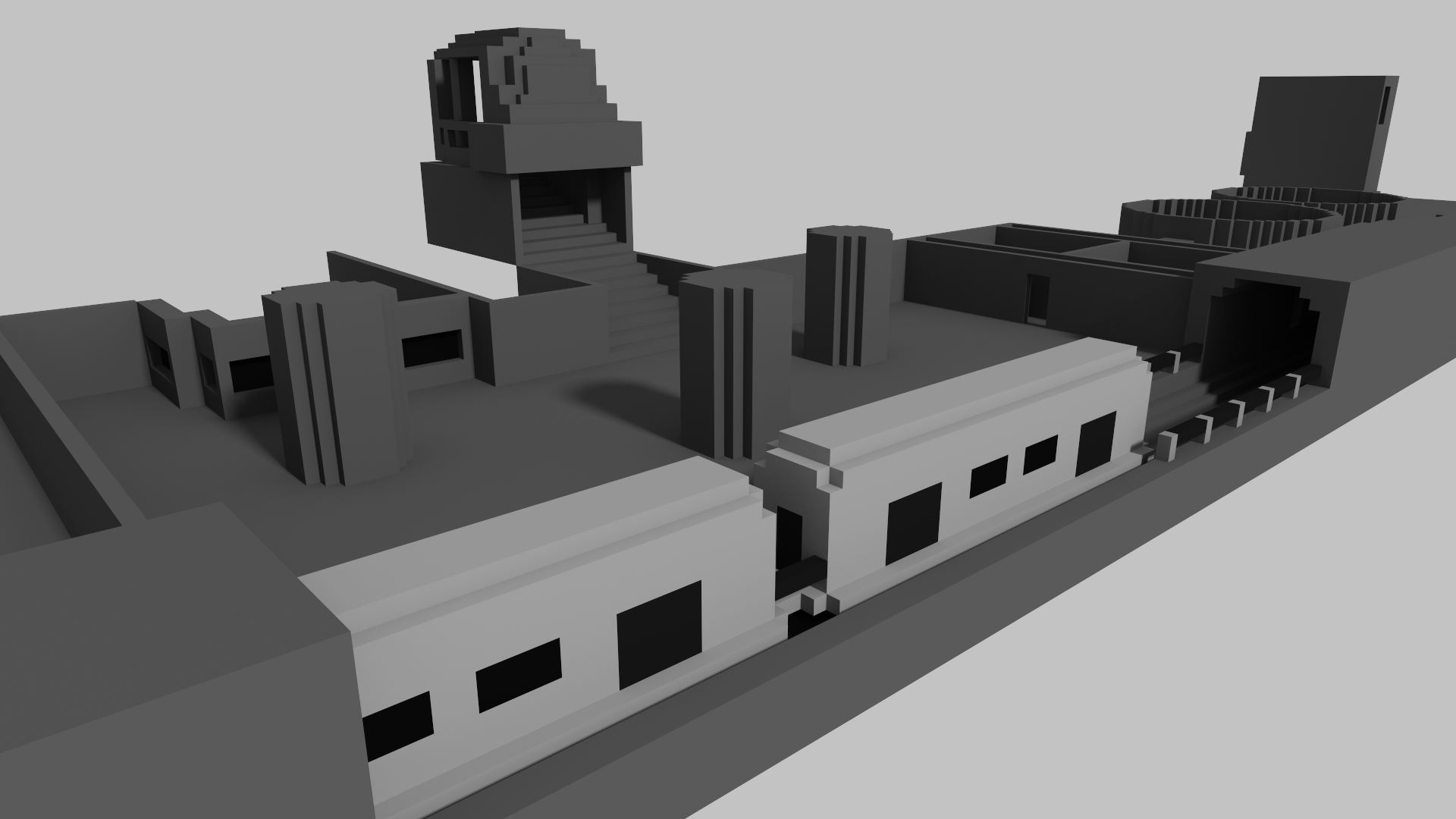
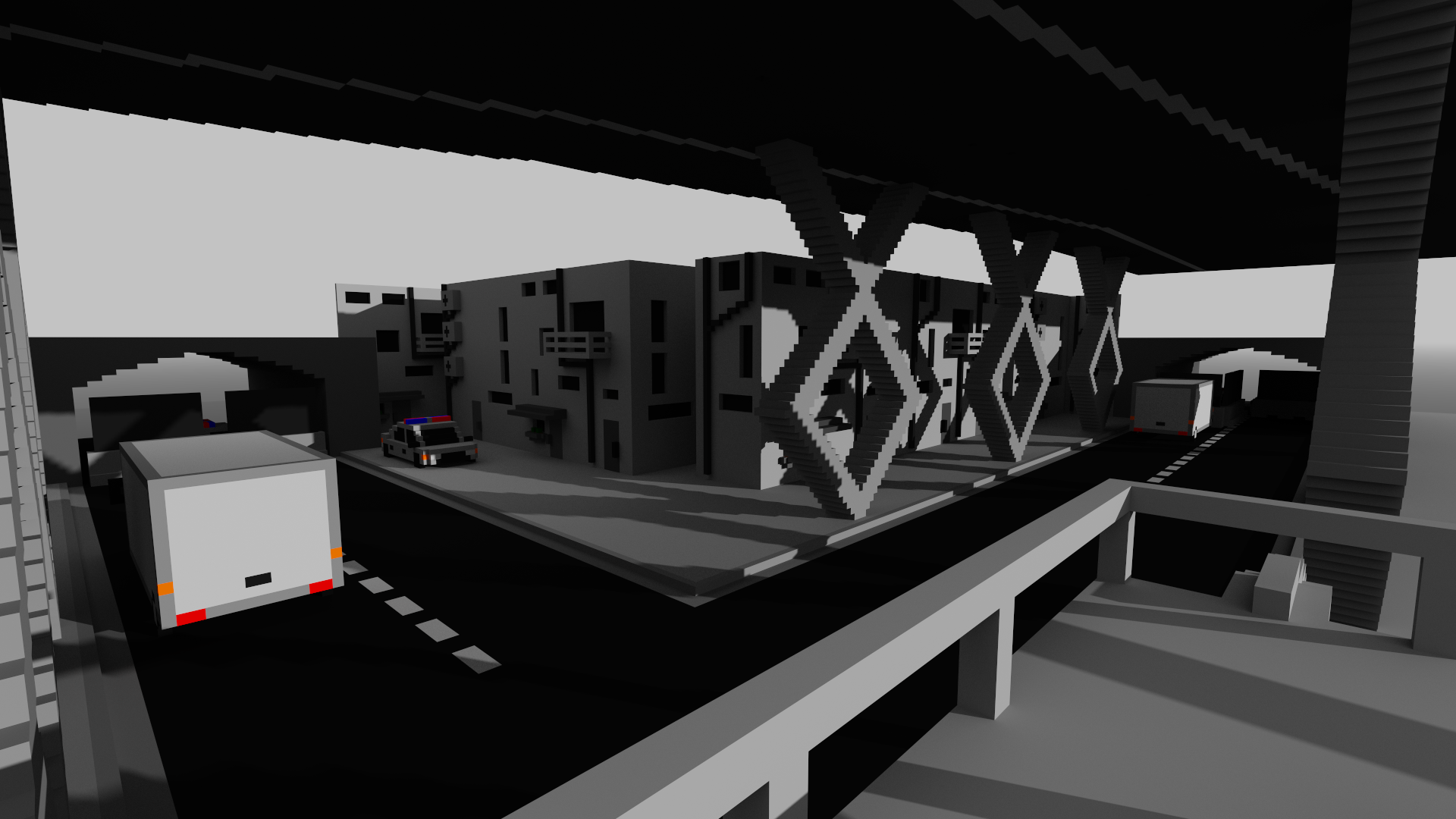
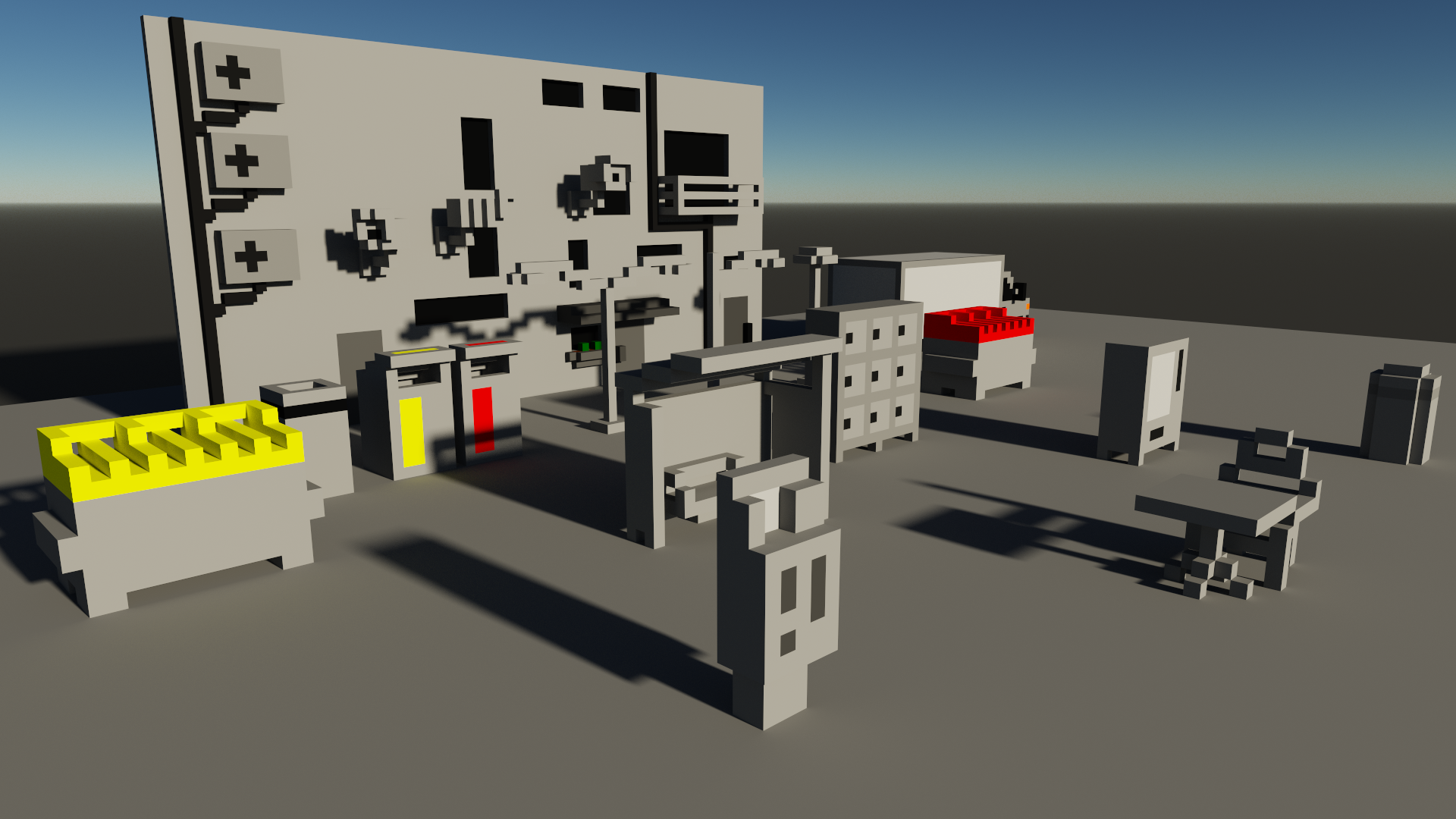
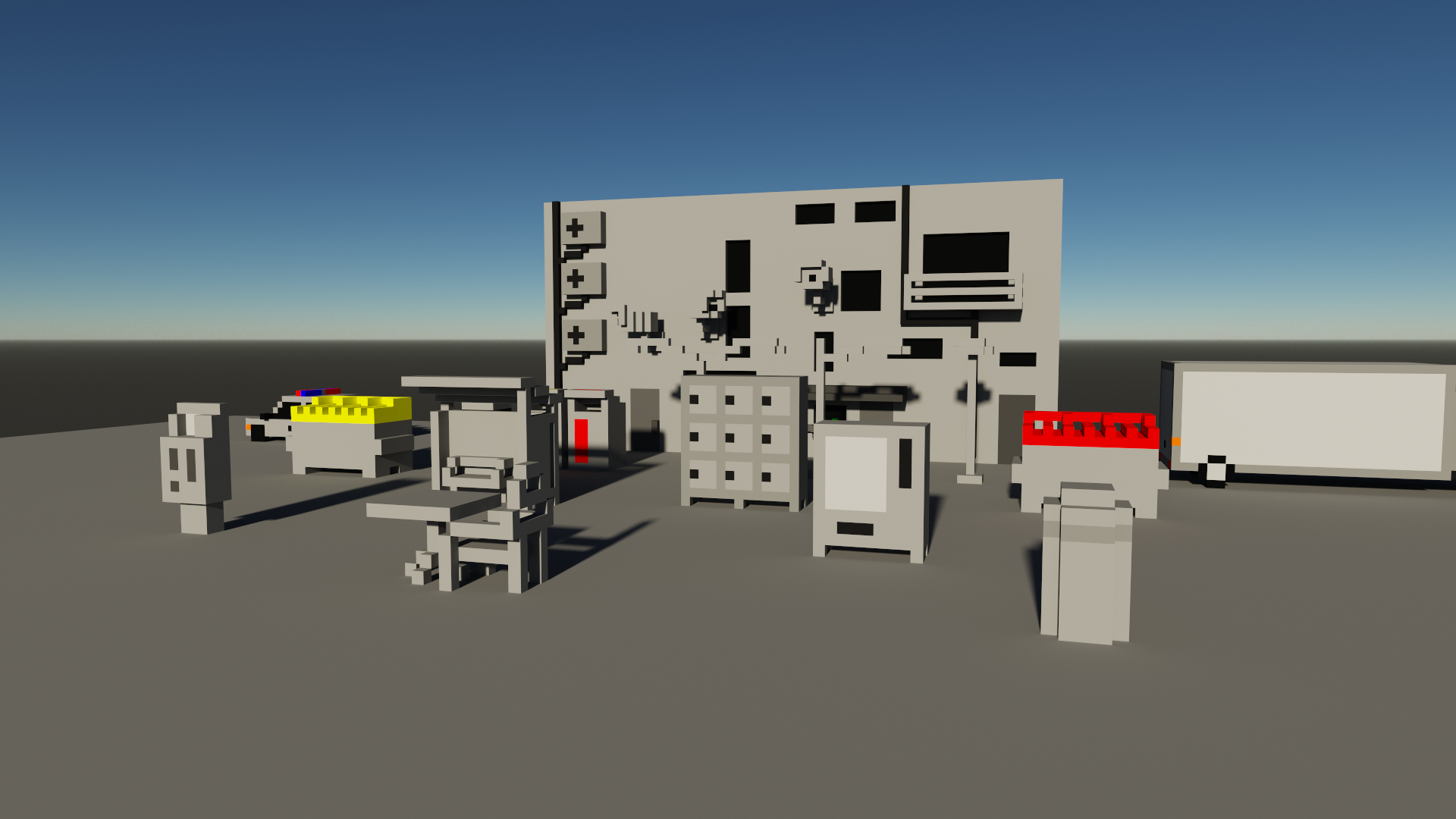
With the environments made, we brainstormed a list of props to populate them. These would be used to encourage mischief and establish a sense of life in the level. My goal was to make props which I thought would be enticing to spray in the game. This focus was on objects which can often be seen in real life with graffiti, such as lockers and bus stops, but also objects with large, flat, dull surfaces, begging for a pop of colour, like a box truck. I also made objects that would make players feel like they were being watched, like police cars and security cameras, to reinforce that feeling of causing trouble. My final set of props was a series of building facades that could be used to enclose the map, stopping the player from getting out of bounds.
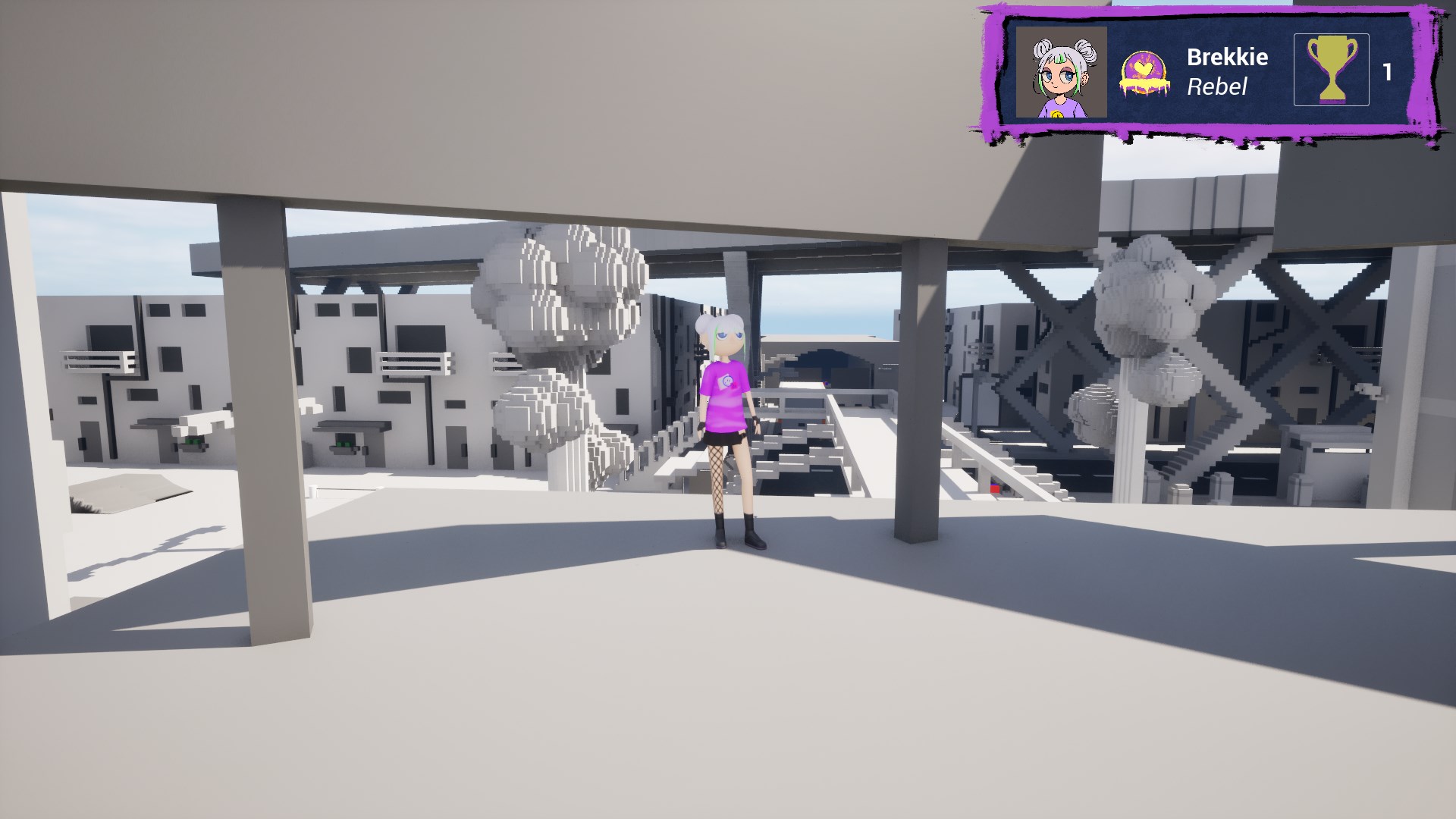
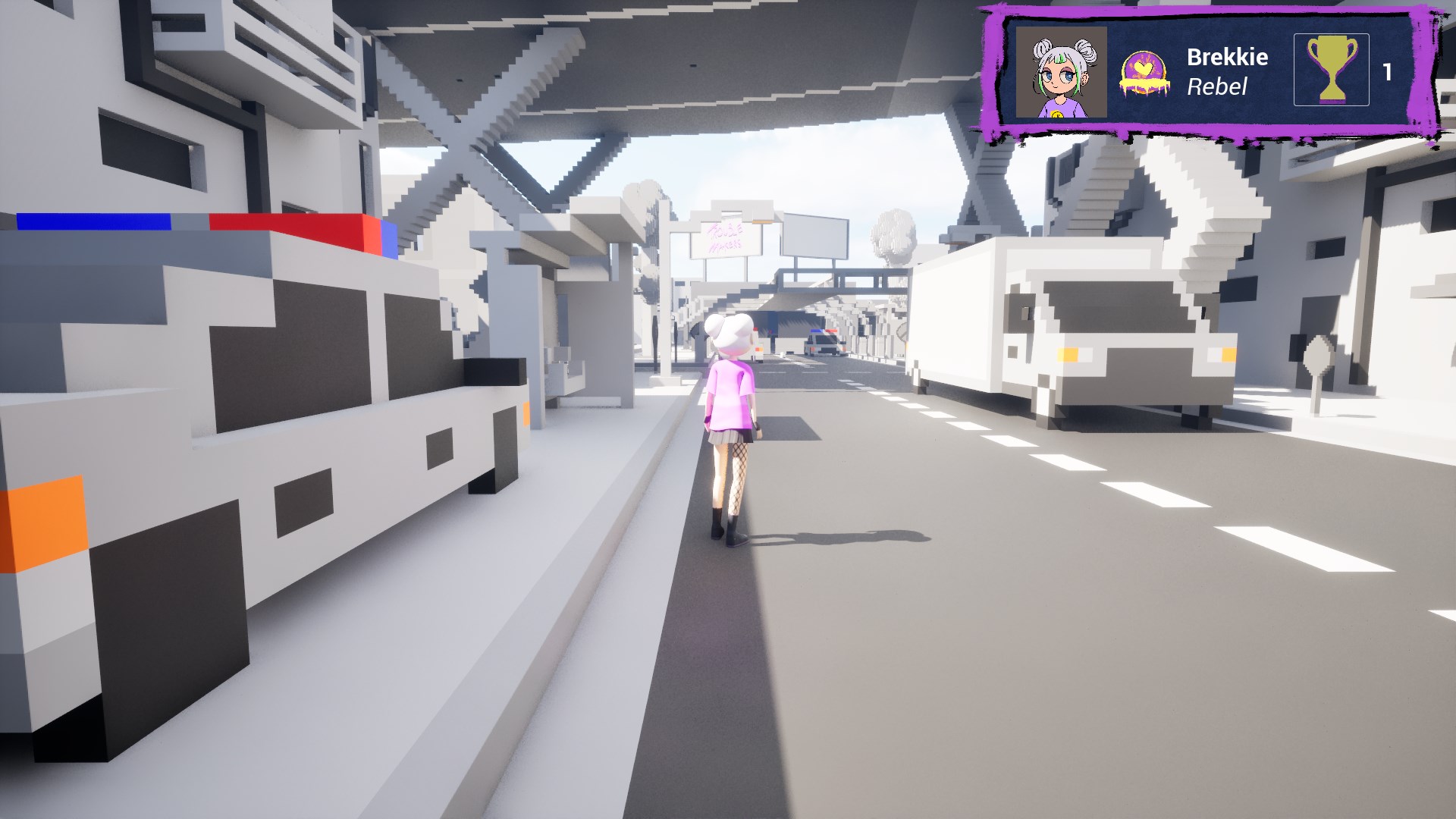
Finally, I combined my two areas with the museum, designed by another team member, and closed the gaps in the environment, adding additional props and lighting. My goal when combining these sections was to create paths through each section, allowing players to navigate an area without backtracking. Personally, I find this sense of pushing forward through the unknown to finally stumble back onto familiar ground to be the most rewarding feeling from explanation. While I plugged holes the player could fall through, it occurred to me that our goal was to encourage players to break the rules by exploring the area, yet I wanted to limit their exploration to the ‘in-bounds’ area? This thought stopped me from completely walling off the outside of the map, leaving a couple areas where the most rebellious players could jump and climb up into, initially, unintended areas.

Want to know more about the development process? Anything unclear or have any feedback? Contact me!
 Frazer 'Dolph' Carpenter | Game Designer